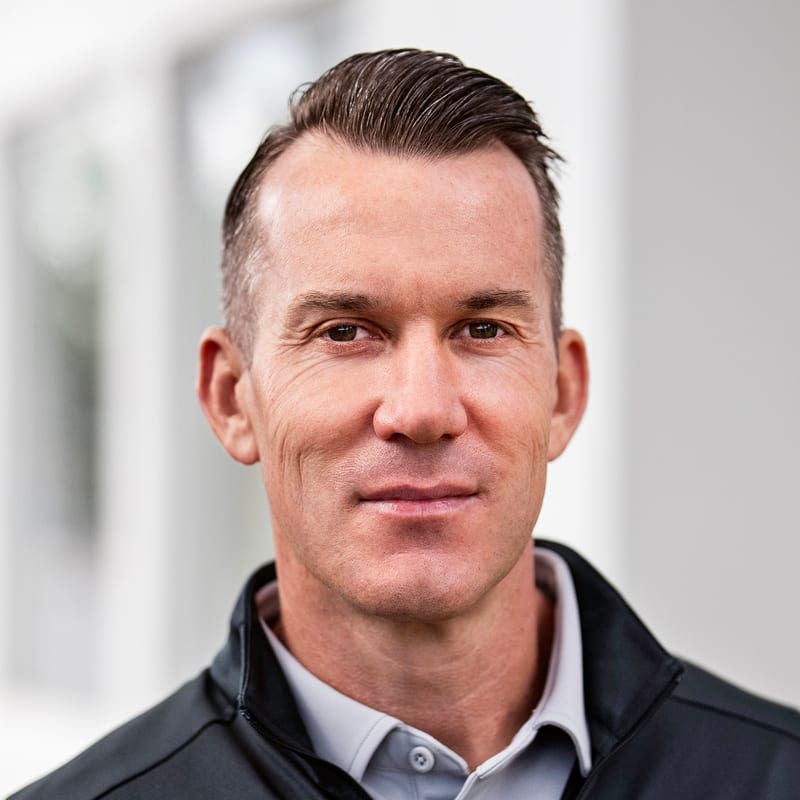
 Jesse Hopps
Ideas
Five questions I'm working on.
Some of these I've watched happen, some I'm still testing. Each one comes with a paper if you want the long version.
The brief to start with
The AIRAS Method for Accelerating Transformation
Change management sequences a rollout. AIRAS sequences the behavior: align, inspire, reflect, apply, scale. It is the sequence that survives the sponsor who launched it.
Adaptation
Is your organization evolving fast enough to comfortably achieve your growth targets?
The strategy may be right. The question is whether the company can become what it needs, fast enough.
Adoption is not adaptation
Adoption uses an answer someone already found. Adaptation finds one when nobody has. Most big changes need both.
Engineering the conditions for adaptation
Stop trying to manage change. The work is engineering the conditions for adaptation to happen naturally, without triggering resistance.
Adaptive capacity
Can a company become what its next challenge needs before that challenge shows up? That's adaptive capacity, and I think a company can build it on purpose.
Ownership
How do leaders build ownership without giving up strategic control?
People defend what they built. They tolerate what they were handed.
Structured Autonomy
Leadership sets the direction and the lines that don't move. The people closest to the work find the answer inside them.
Resistance is information
It can be what someone stands to lose, a bad incentive or a strategy that's wrong. Read it before you push harder.
Guided Discovery
How do you help someone without taking the challenge away from them? Mostly by asking.
Capability
How is capability built through real work?
Being able to do the job usually takes doing the job.
Ninety days of real work
A live commercial challenge, a coach who has sat in that chair, and tools that turn up when the team asks.
From push to pull
At LANXESS, business units went from having the program pushed at them to asking when it was coming.
Capability that moves inside
The coaching starts with my team and moves, step by step, to the company's own coaches.
Adversity and performance
What do people do when the work gets hard?
Knowing what to do isn't the same as doing it under pressure.
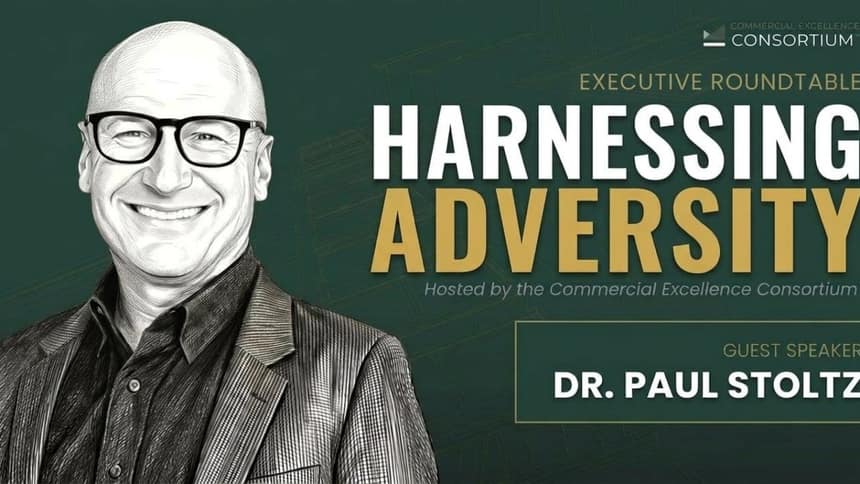
The Lasting Impact Trifecta
Winning mindset, fast adaptation and lean performance. It's a working idea from the field, and I keep testing it.
Adversity is the material
Dr. Paul Stoltz's work on AQ® changed how I saw this. The hard part of a real project isn't a flaw in the learning. It's the material.
Lean performance isn't cutting heads
It means more back from what the company already spends, not more work from fewer, tired people.
Lasting impact
Why do some changes become the way people work, while others fade?
The leaders I spend most of my time with don't want more transformation activity. They want a change that's still in place a year later.
Understanding is easier than wanting
A Consortium roundtable rated getting people to want a change far harder than getting them to understand it. One group, not a study.
Evidence earns trust
In the field work I've seen up close, a first win bought the trust that made the next change easier.
The Difference Maker
The person accountable for getting hundreds or thousands of people to work differently, most of whom don't report to them. The book is about them. About the book
How we run it · AIRAS
Change management sequences a rollout. AIRAS sequences the behavior.
AIRAS is the delivery rhythm a transformation runs on: how mindset, skill, and tools get installed in a population rather than announced to one. It runs in five stages, cohort by cohort.
- AlignShared context, commercial reality, and personal stakes before any new content.
- InspireThe intrinsic ‘why’ surfaced through guided discovery, not through messaging.
- ReflectBetween sessions, AQ® tools reframe resistance and doubt as signal.
- ApplyLive commercial problems, worked alongside operator‑coaches who have done it.
- ScaleOwnership transfers: participants teach, coach peers, and embed the behavior.
The order is deliberate. Align and Inspire build the motivation to engage before any framework arrives. Reflect gives people a way to work through the hard middle. Apply puts the capability into live P&L work, and Scale moves ownership from the program to the people, who then run the next cohort. Reverse any two of those stages and the rhythm behaves like a rollout again.
A rollout installs information.
AIRAS installs momentum and lasting impact.
24 mechanisms, by stage
Behind the five stages sit 24 mechanisms, each built to answer one question.
| Stage | Mechanism | The question it answers |
|---|---|---|
| Align9 mechanisms | Portfolio Review | How can we increase our impact on results? |
| Resistance Analysis | How can we convert resistance into momentum? | |
| “Red Dot” Priority Alignment | How can we align on which capabilities matter most? | |
| Executive Positioning Deck | How can we get approval to test a new approach? | |
| Stakeholder Interviews | How can we involve the right people in the process? | |
| Accelerator / Academy Program Plan | How can we design a pilot that can scale? | |
| Pilot Region / BU Selection Process | How can we pick the right place to get started? | |
| Cohort Participant Nominations & Invitation Roll-Out | How can we build genuine excitement and buzz? | |
| Performance Management & HR Integration Plan | How can we make this part of how we operate? | |
| Inspire4 mechanisms | Expert Podcast Inspiration Videos | How can we inspire our people to take initiative? |
| Guided Discovery Individual Assignment | How can we get everyone’s ideas on the table? | |
| AQ® & GRIT™ Psychometric Assessments | How can we show evidence that a mindset shift is happening? | |
| Adversity Quotient® & GRIT™ Keynote | How can we reframe adversity from a threat to a fuel source? | |
| Reflect4 mechanisms | Psychologically Safe Environment Design | How can we create the conditions for people to be honest? |
| Core Challenges Accountability Builder | How can we get clear on what we’re up against? | |
| Priority Challenges Voting Exercise | How can we build resolve and the will to act? | |
| “CHAIN” Needs Definition Exercise* | How can we surface what we think we need? | |
| Apply5 mechanisms | Growth Squad Formation | How can we leverage each other’s strengths? |
| Growth Project™ Charter Definition | How can we clarify what we plan to do? | |
| “Science Fair” Ownership Expo | How can we make our commitments public? | |
| 90-Day Growth Project Execution by Squads | How can we build skills while solving real issues? | |
| On-the-Job Coaching by Operator-Coaches | How can we use obstacles to build tenacity and grit? | |
| Scale2 mechanisms | Impact Reports + Roadblock Removal | How can we recognize progress and get support? |
| Growth Project Scale-Up Planning | How can we “double down” on what’s working? |
CHAIN is Kurt Friedmann’s framework.